

In 1989 I started my career as a graduate trainee with Harrods.
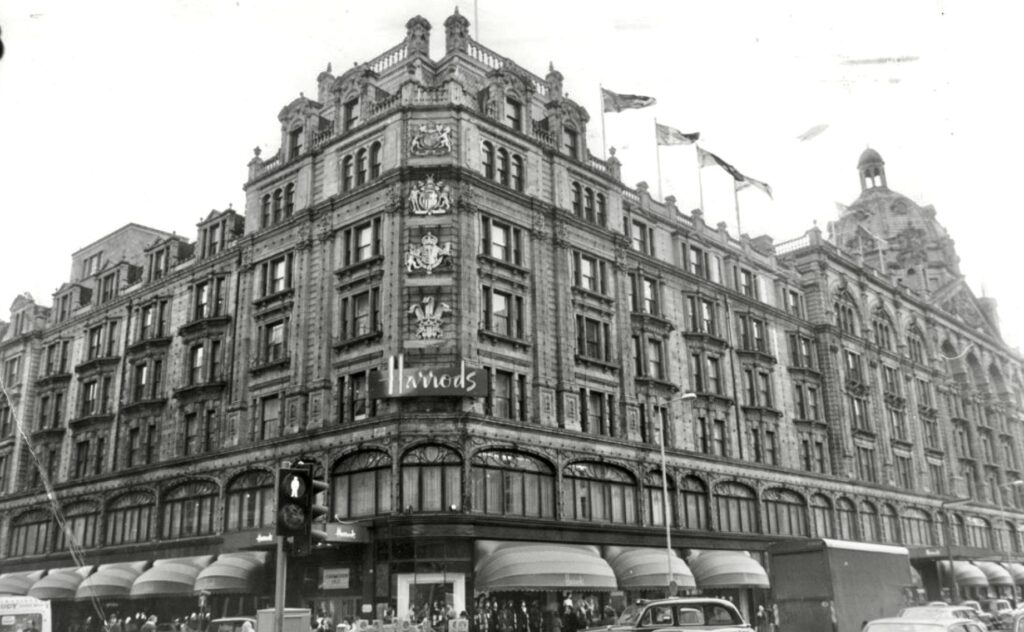
It seemed like a dream job.
But behind the polished façade and glittering splendour were lessons about power, silence, and misogyny that shaped the rest of my career in HR.
On this International Women’s Day, I want to share what I wish I had understood sooner.
The Façade
When I first walked through the staff entrance of Harrods as a graduate trainee, I felt like I had landed somewhere dazzling. It was a dream opportunity.
Harrods was not just a department store—it was a British institution, a symbol of global luxury and prestige in the heart of London. The building itself seemed to hum with confidence: immaculate displays, beautiful merchandise, and customers who expected the very best of everything.
As a young, newly employed woman, it felt like stepping onto a stage where elegance and success were part of the uniform.
But behind the polish, the lessons I learned had very little to do with retail—and a great deal to do with power, exploitation, and the fortitude of women in a workplace that not only failed to respect them but, in far too many cases, did them terrible harm.
A Culture of Fear
At the time, the store had fairly recently come under the ownership of Mohamed Al-Fayed (1985). His presence loomed over the organisation. Even when he was not physically present, you could feel the atmosphere that surrounded him: a culture of strict hierarchy, absolute loyalty, and an ever-present fear of displeasing the man at the helm.
For employees in positions of leadership, this environment often translated into ambition that was well served by degrees of acquiescence in a system designed to pander to the wants of an autocratic owner. For many young women, however, it meant something far more complex—and, as it later transpired, dangerous.
Women in the store were judged not only on their performance but also on their appearance, their compliance, and their willingness to navigate an unspoken system where power flowed in only one direction. Advancement often seemed less about merit and more about whether you fitted a particular image or expectation. It was rarely discussed openly, but everyone understood the unwritten rules.
There was even a phrase whispered around the departments: if you were a “Fayed girl”, you were considered dangerous. People assumed you might be watching, reporting back, passing on information that could damage careers.
Few of us understood that those women were often the most vulnerable. Behind the rumours and suspicion were individuals who were being manipulated, groomed, exploited, and—in far too many cases—grievously harmed while the wider system looked the other way.
The Normalisation of Abuses of Power
What struck me most was how normalised it all felt. Misogyny didn’t always shout; it was quiet and insidious.
It lived in dismissive comments, in the assumption that a woman’s ambition was a currency to be traded for compliance, and in “jokes” that reduced victims to stereotypes. At its heart was the dehumanisation of young women who had little protection and even less power.
For many of us, working in that environment simply meant doing our best to adapt. Some became highly skilled at navigating the politics of the organisation. Others kept their heads down and focused on doing their jobs well enough to avoid attention. A few pushed back—but doing so carried enormous risks.
Looking back, Harrods magnified broader attitudes that still existed in the late 1980s. But at Harrods, that power imbalance was deliberately and cruelly weaponised by the disturbing personality of the man who owned it.
A Fortuitous Escape
My own time as a trainee included a stint at the Management Offices’ front desk, where I saw Mr Al-Fayed frequently.
I was lucky. I did not fit the “profile” he favoured; I was small, slight, and dark-haired—and fortunately remained fairly incognito.
Until my handbag was stolen from my desk, with my keys, wallet, and identification inside. I was called to see the Chairman in his huge, gold office. He seemed almost avuncular and protective, casually peeling off a few £50 notes from a roll to recompense me for my losses.
I declined, pointing out that my mock croc handbag hardly warranted such generosity – but I still ended up with one note.
When he suggested I stay at Park Lane until I could return home safely, I was able to state -without giving it a second thought—that my housemate, who also worked at Harrods, had a key and I would be safe going home with her.
It was simply a fortuitous truth that might very well have saved me from potential harm.
Because, although I had been warned in the vaguest of terms by the training department that I might encounter “difficult” behaviour from Mr Al-Fayed, I was naive and trusting. My biggest concern at the time was that he often swore profusely and I was terrified of making mistakes that might put me in the firing line or blot my training record.
So I reassured myself that everything was fine.
And for a time, it was, as I successfully went on to complete further assignments throughout the store.
The Turning Point — A Veil is Lifted
At the end of the training scheme I was promoted into the recruitment department, known at the time as Prospects. Eventually I was given more responsibility, including leading on graduate recruitment.
The graduate training scheme still carried an aura of legitimacy and promise. There was a retail and trades qualification attained through a college in Leicester Square, and the programme offered genuine exposure across the business. I was, in many ways, proof of the opportunities the scheme could offer.
Everything changed when I was informed that the Chairman was insisting on personally conducting final interviews for graduate candidates who had already passed our exhaustive selection process.
At the same time, trainees were now required to sign agreements committing them to a number of years of service after they left the scheme or face heavy repayment costs for their training.
That was the moment I felt a deep, instinctive discomfort.
The level of personal access the Chairman demanded—coupled with the financial “lock-in” of young staff—did not sit right with me.
I realised I could not, in good conscience, continue and I resigned in early 1993 with no firm job to go to, but with absolute certainty that staying was no longer an option.
In the many years since, although I have worked with many companies, I have never again chosen to work for a large corporate organisation. That decision was probably unconsciously shaped by my experience at Harrods and it consciously shaped everything I have done in my professional life to try and improve workplaces since.
The Weight of Retrospect
Learning now, decades later, about the allegations and testimonies surrounding the late Mohamed Al-Fayed has been devastating.
A colleague from that time has since given testimony describing crimes that are heinous. It is painfully clear how systematic the abuse was and I feel a profound sorrow that, despite knowing her well, I had no inkling of the nightmare she was to endure and maybe was already when I knew her.
How did it happen?
Only in more recent years have grooming, coercion, and controlling behaviour become better understood. Young women were placed in impossible situations they could not reasonably have anticipated or easily escaped from.
Many were threatened—directly or indirectly—with harm to themselves or their families if they crossed a powerful man. The potential loss of livelihood and career was overwhelming.
Few could have believed they would be heard. Fewer still could have imagined that someone with such power and influence could ever be stopped.
A Continuing Dread
There is also another dread that has stayed with me over the years.
During my time in recruitment I helped hire many people into the organisation—some for the shop floor, others for the graduate training scheme.
I believed I was opening doors for them.
But I will never know whether any of the people I recruited later became one of the Chairman’s victims.
That possibility is deeply troubling.
If that did happen, I can only say that I had no idea of the danger or the depths of abuse taking place within the organisation. And I am profoundly sorry if anyone who joined Harrods through a process I was part of was later harmed.
The Path Forward
Today, after more than thirty years working in HR, I am guided by one simple belief:
Workplaces must be safe, respectful, and psychologically secure for everyone.
Ethical conduct is not merely a choice for organisations; it should be a fundamental prerequisite for businesses to thrive. The Employment Rights Act (2025) codifies more of these safeguards, ensuring sustainable prosperity is built on a foundation of fairness.
Moreover, an organisation’s culture is not defined by policies written in handbooks, but the behaviours leaders model even if they think nobody is watching or they don’t care.
And the exposure of men like Al-Fayed, Epstein, and Weinstein reminds us that wealth and prestige cannot shield wrongdoing forever. Brave survivors eventually bear witness to their suffering, and their testimony should become the foundation of accountability for perpetrators and enablers alike. It is a further irony that death has meant they have escaped even that, but it has maybe also enabled more women to speak out. We should honour their bravery by believing them and learning any lessons we can about how we can make sure this does not happen again.
International Women’s Day
On this day, I wish for the next generation of women not to have to “navigate” their way around predators.
I hope that those entrusted with protecting employees recognise the immense personal cost of coming forward.
I pray that those who believe themselves above the law begin to realise that they are not, and that they pay for the harm they have done.
I would love for more progress to be made—but it remains fragile, particularly in a world where powerful, self-entitled men still lead parts of our global landscape in ways that are difficult to watch and comprehend. Speaking out in allyship and solidarity is more important now than ever.
Finally, I simply wish that I had known better, spoken sooner and pushed back harder.
A Testament
The wonderful women I worked alongside at Harrods were talented, resilient, determined, funny, clever, and resourceful.
Their beauty shone—and should never have been used against them.
They deserved dignity, opportunity, and respect not a workplace that hid corruption and cruelty behind glittering wealth, Royal Warrants and a culture of silence.
The generations that follow deserve better.
Read Morehttps://www.linkedin.com/feed/update/urn:li:activity:7131293152220459008/: What My Early Career at Harrods Taught Me About Power, Silence, and Misogyny
#InternationalWomensDay
#WorkplaceCulture
#WomenAtWork
#Leadership
#RespectAtWork
#HRLeadership
#SpeakUp


